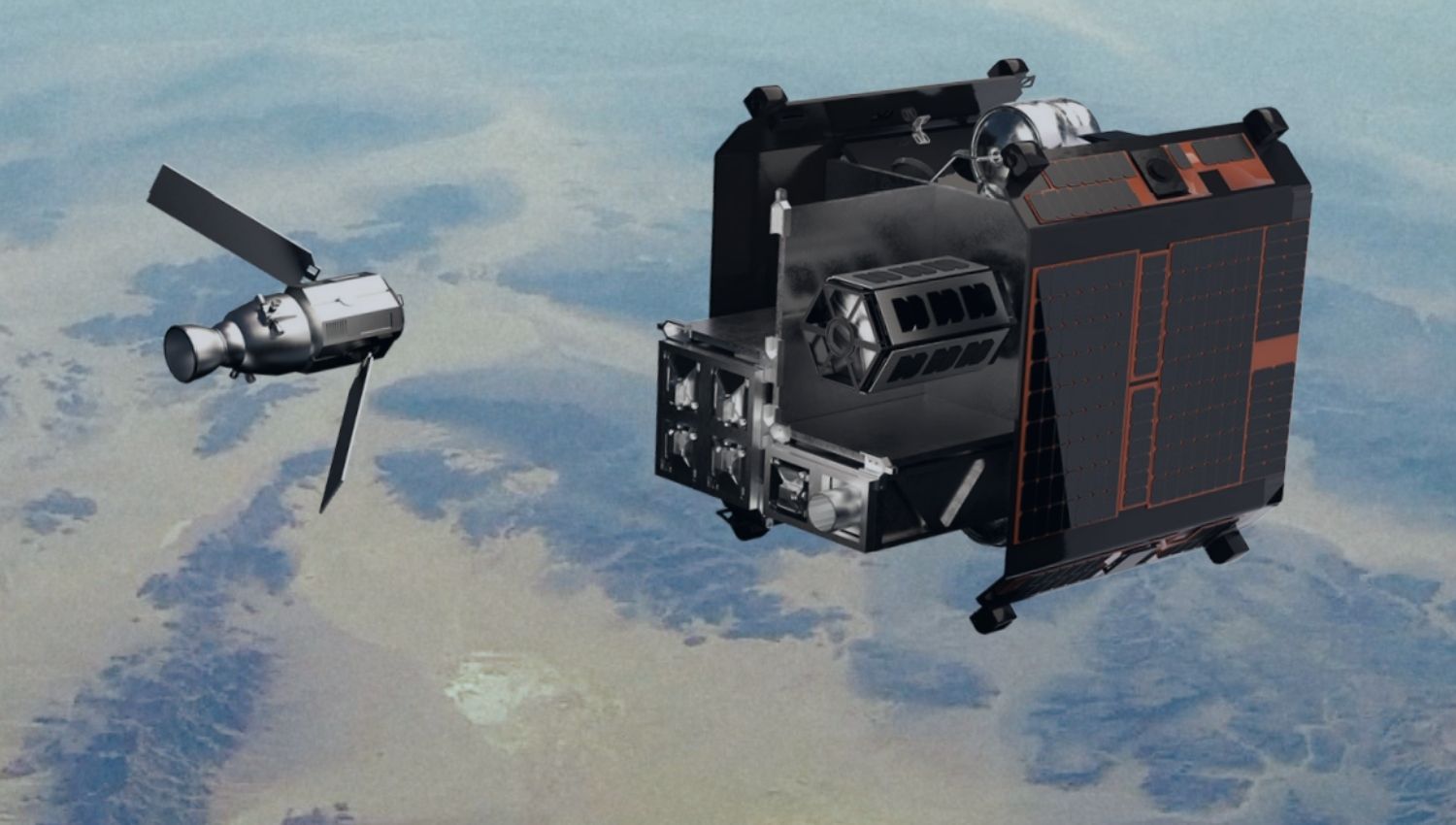
D-Orbit launches two ION Satellite Carriers on its seventh mission
D-Orbit, the space logistics and orbital transportation company listed on ClubDealOnline in 2020 through the vehicle D-Spazio Capital Partners, has launched Second Star to the Right, the seventh commercial mission of the ION Satellite Carrier (ION), D-Orbit’s proprietary orbital transfer vehicle (OTV). This is the first mission to carry two ION units in a single launch.
A Falcon 9 rocket lifted off on January 3, 2023, at 9:56 a.m. ET (14:56 UTC) from Space Launch Complex 40 at Cape Canaveral Space Force Station, Florida. Both vehicles were successfully deployed into a 525 km sun-synchronous orbit, respectively 1h 24m and 1h 26m after liftoff.

With the launch successfully completed, D-Orbit’s mission control team is now performing launch and early orbit operations (LEOP)—a sequence of checks to assess the vehicle’s health before entering the operational phase.
Collaboration with Clients
ION is a flexible and efficient OTV designed to precisely deploy satellites and host third-party payloads for orbital demonstrations. During this mission, ION SCV007 and SCV008 will deploy the following satellites:
purpose is to demonstrate NPC Spacemind’s platforms in orbit, together with ARTICA, an innovative deorbiting sail meant to accelerate orbital decay and help mitigate space debris. Both spacecraft will be released using the CubeSat deployer SMPOD12XL-3X (NPC Spacemind). Engineered for high performance and operational flexibility—including rapid reset and rearming—the SMPOD enables fast turnaround and strong economic competitiveness.
Four 5-kg CubeSats from Astrocast. These satellites, equipped with attitude determination and control systems (ADCS) and propulsion capability for fine pointing and in-orbit maneuvering, will expand Astrocast’s global IoT constellation.
SHARJA-SAT-1 and TAUSAT-2, from the Sharjah Academy for Astronomy, Space Sciences (SAASST) and Tel Aviv University (TAU), launched under a contract with ISIS Space.
• Sharjah-Sat-1 is SAASST’s first CubeSat mission, developed with ITU-SSDTL and Sabanci University. Its main payload is an enhanced X-ray detector (iXRD) designed to observe hard X-ray sources. The secondary payload is a dual-camera Earth-imaging system.
• TAUSAT-2 is a CubeSat based on commercial off-the-shelf (COTS) components. It carries a scientific payload of light-emitting diodes for an optical tracking experiment conducted by TAU, and includes an S-band transmitter demonstrating a new communication protocol.
Kelpie-1, a 3U CubeSat developed by AAC Clyde Space. It will provide AIS Automatic Identification System data exclusively to ORBCOMM and its governmental and commercial customers. Based on the EPIC 3U platform, the satellite carries a 4-kg payload with a low-noise proprietary bus architecture, a multi-channel SDR payload, and an advanced antenna concept developed by Oxford Space Systems to maximize AIS detection across message types.
The mission also includes in-orbit demonstrations of third-party payloads:
DRAGO-2, a compact SWIR camera developed by the Instituto de Astrofísica de Canarias (IAC) for Earth observation. It is the successor to DRAGO-1, launched as part of ION SCV002 in 2021. DRAGO-2 can capture high-quality multispectral images in the short-wave infrared and has an onboard processing unit capable of compressing, encrypting, and applying advanced algorithms—including super-resolution—to acquired imagery.
Genergo-2, a new type of space propulsion system developed by Genergo to test technical specifications that will support future developments. Modeling and test definition were carried out in collaboration with the Department of Aerospace Science and Technology of Politecnico di Milano.
Cryptosat-2, an enhanced version of a nanosatellite prototype developed by Cryptosat for secure cryptographic applications, such as electronic voting, reliable random-beacon generation, and verifiable delay functions for smart contracts.
Second Star to the Right is the first ION mission of 2023. D-Orbit launched its first ION in September 2020 aboard an Arianespace VEGA rocket, followed by five additional missions on SpaceX Transporter launches. With this mission, the company will have transported more than 90 payloads to space.
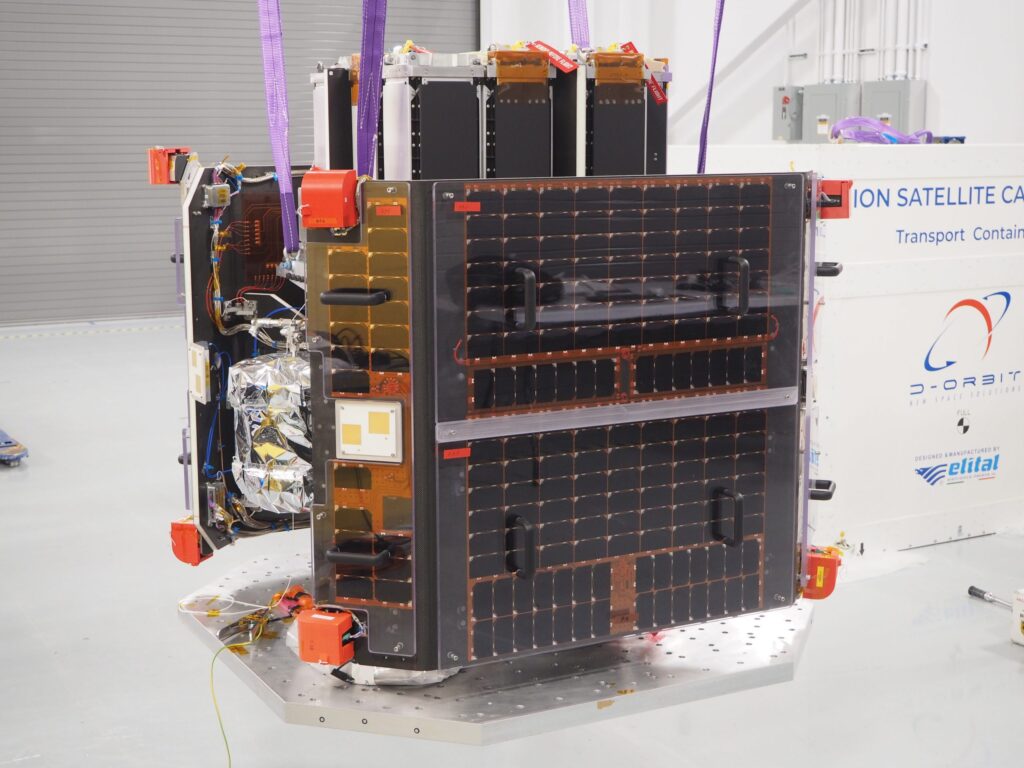
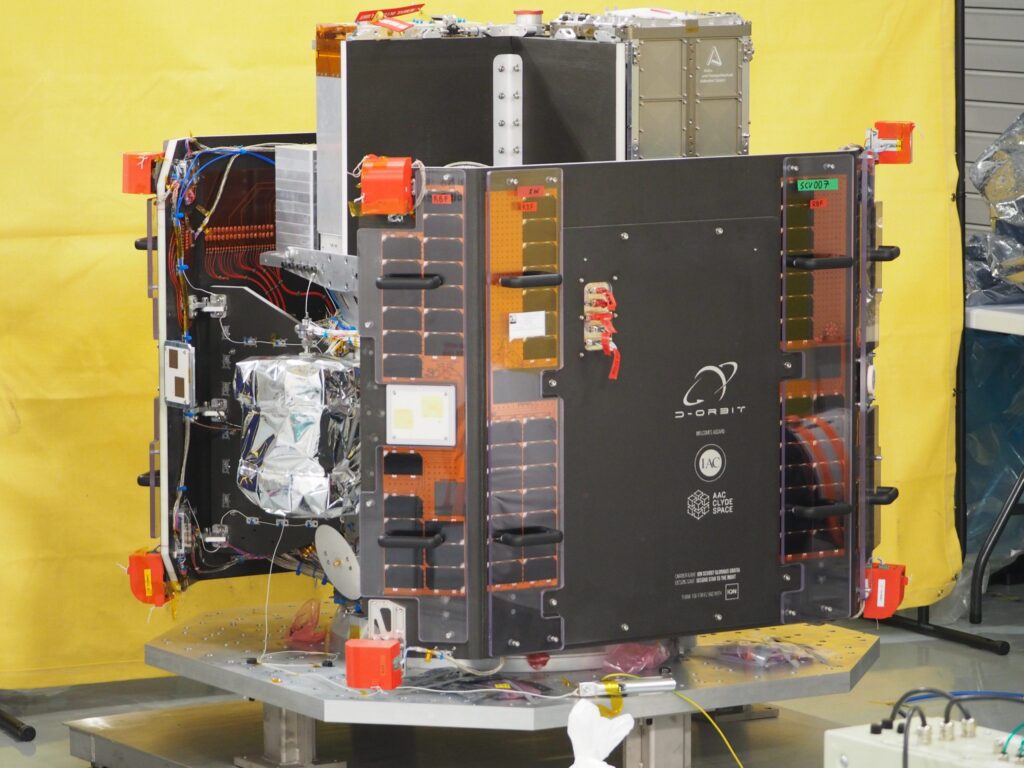
(Below: images of the ION Satellite Carrier)
Leave a Reply