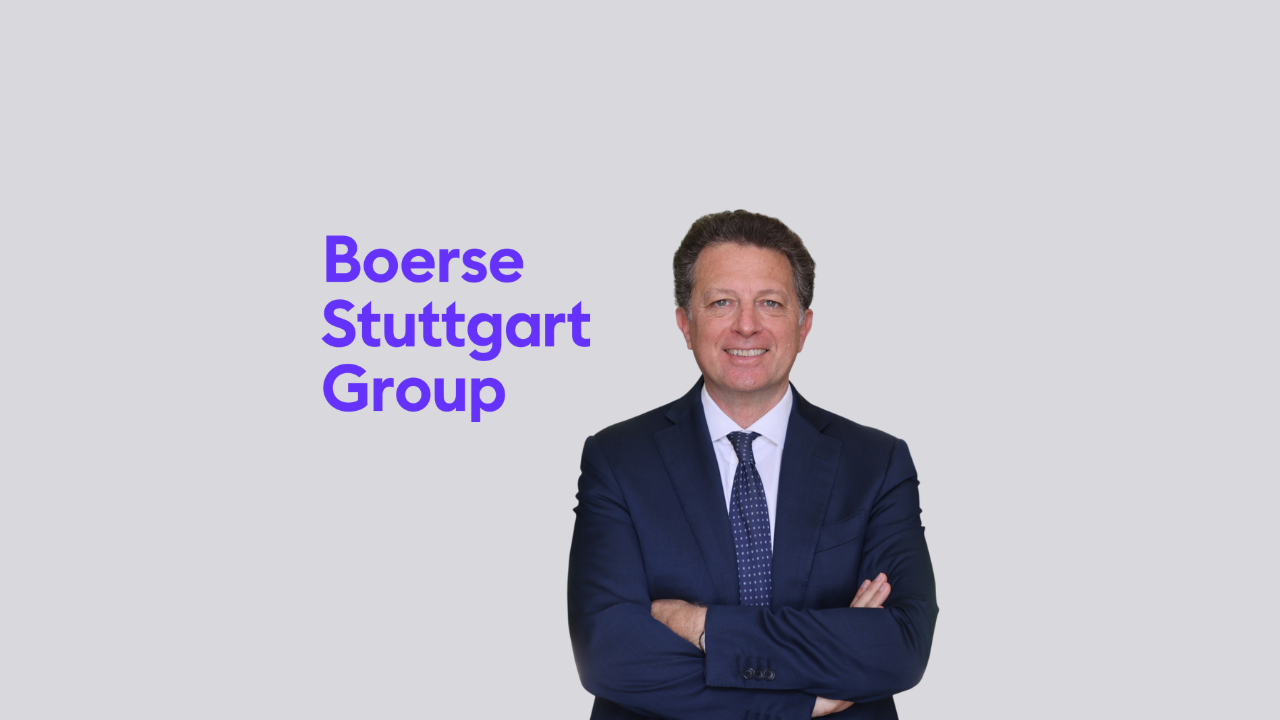
Boerse Stuttgart Group, through the Seturion project, is Weltix’s technology partner for the near-real time settlement of tokenized financial instrument transactions. In this interview, Luciano Serra discusses Boerse Stuttgart’s evolution in digital assets, the decision to focus exclusively on institutional investors in Italy, and the outlook for security tokens (tokenized financial instruments)—which Serra believes are destined to progressively replace today’s dematerialized financial instruments.
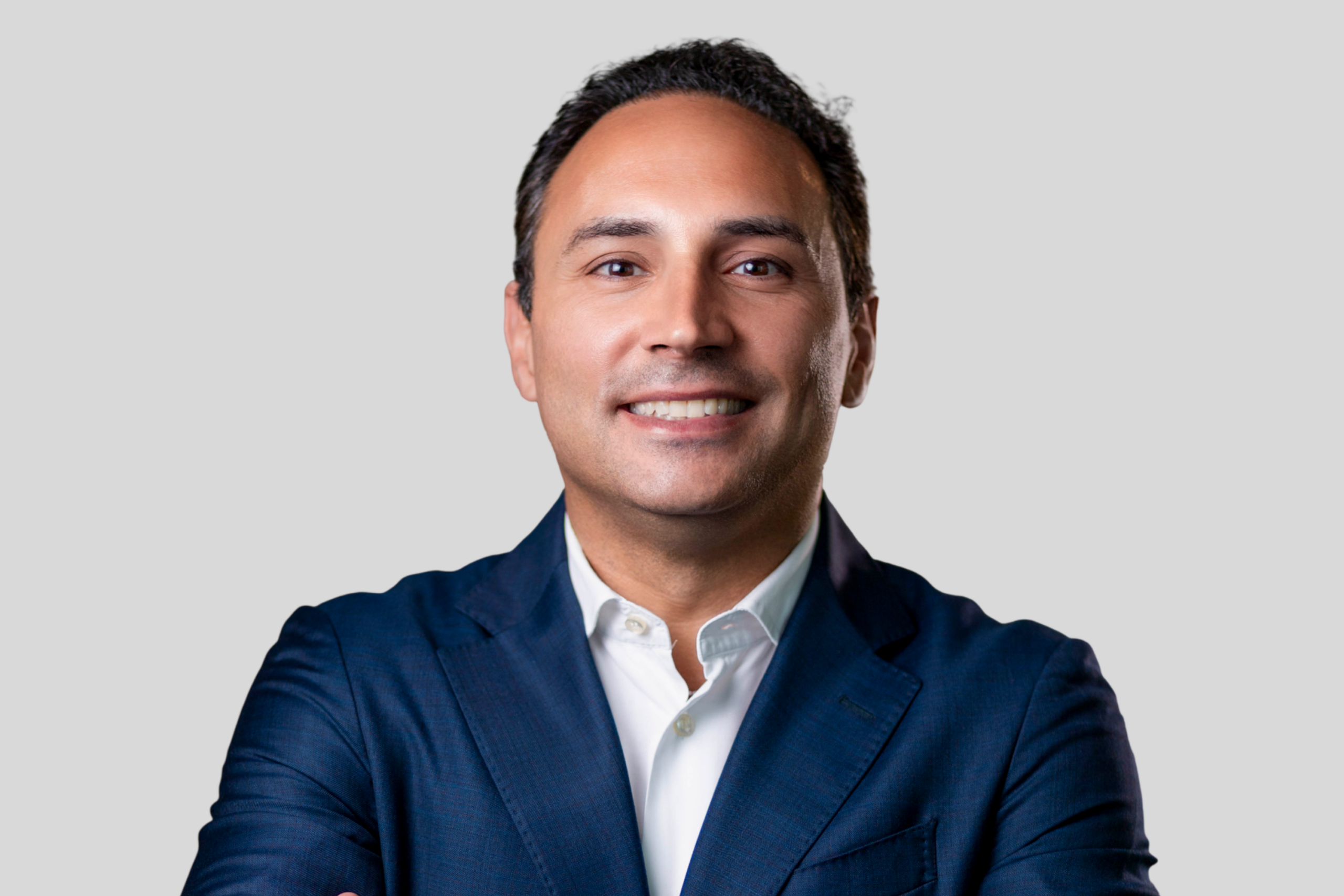
Who is Luciano Serra, and how did you enter the world of digital finance?
I am an electronic engineer with a master’s degree from Bocconi University. I have spent around thirty years working in technological and financial innovation, with the last fifteen focused primarily on fintech. I got involved with blockchain in 2017, and in 2018 I co-founded Iconium—an Italian initiative created to support international startups developing protocols, blockchains, and tokens, mainly by investing in their tokens. This experience eventually led me to represent Boerse Stuttgart Digital in Italy.
What is Boerse Stuttgart Digital, and how was its expertise built?
Boerse Stuttgart Digital is the digital asset and digital finance arm of the Stuttgart Stock Exchange Group. Behind it is an exchange group with a 165-year history—the second-largest in Germany after Frankfurt and the sixth-largest in Europe.
Our digital journey began between 2017 and 2018 with the acquisition of a specialized company, followed by the launch of our first services in 2019: initially a Multilateral Trading Facility (MTF) to buy, sell, and custody crypto assets, and later Bison, a retail brokerage app.
From the very beginning, we adopted a fully regulated model, obtaining several licenses in Germany. Today, we also hold a MiCAR license and operate in Italy, Germany, Austria, Switzerland, France, Spain, and Slovenia.
How are you approaching the Italian market?
In Italy, we chose an exclusively institutional positioning, unlike in Germany and other countries where we also serve retail clients. Our goal is not to compete with traditional financial players, but to become the partner of choice for regulated entities looking to enter digital finance.
We serve hundreds of thousands of retail clients globally and dozens of institutional clients. We apply the same rigorous processes to digital assets as traditional finance—ranging from compliance and anti-money laundering (AML) to combating financial crime. These are standards we adopted even before they were explicitly mandated by regulations.
Boerse Stuttgart Digital also has a market segment dedicated to security tokens. What are they?
Unlike cryptocurrencies, security tokens are financial instruments such as stocks and bonds that, instead of being centrally dematerialized, are cryptographically recorded on a blockchain or Distributed Ledger Technology (DLT). In Italy, they are commonly referred to as tokenized financial instruments.
These instruments do not fall under MiCAR regulations, but rather under the DLT Pilot Regime—the temporary European regulatory framework upon which the Italian Fintech Decree and the Consob authorization (which designates Weltix as the manager of the DLT register) are based.
As an exchange dedicated to security tokens, we are preparing to become operational in the European Union, having already been operational in Switzerland for a year. Within the EU, we plan to launch our services from Stuttgart early next year.
Do you believe there is genuine interest in tokenized financial instruments?
Absolutely. We are looking at a market driven by technological replacement: just as we transitioned from paper certificates to dematerialized securities, the next step will be moving toward tokenized ones.
The benefits are significant: a reduction in intermediaries and costs, greater liquidity and fractional ownership, and, above all, faster settlement—moving from the current two days to around 30 minutes, which in the future could be reduced to just a few seconds. Furthermore, tokenization can expand the investor base to include younger generations who prefer interacting through a wallet rather than opening a traditional securities account.
Finance quickly adopts technologies capable of improving efficiency, speed, and margins. For this reason, I consider the adoption of tokenization to be inevitable; it innovates the underlying infrastructure without altering the core nature of finance.
Major U.S. players are already several years ahead: institutions like JP Morgan and BlackRock, after initial skepticism, have fully embraced both the crypto world and security tokens. While it is hard to pinpoint exactly how quickly this transformation will happen, the direction is clear: security tokens are destined to progressively replace the current dematerialized model.
What is the nature of the collaboration between Boerse Stuttgart Digital and Weltix?
Within the Boerse Stuttgart Group, we created Seturion—our company dedicated to the settlement of security tokens, which involves the exchange of funds (in traditional fiat currency or stablecoins) for tokenized financial assets.
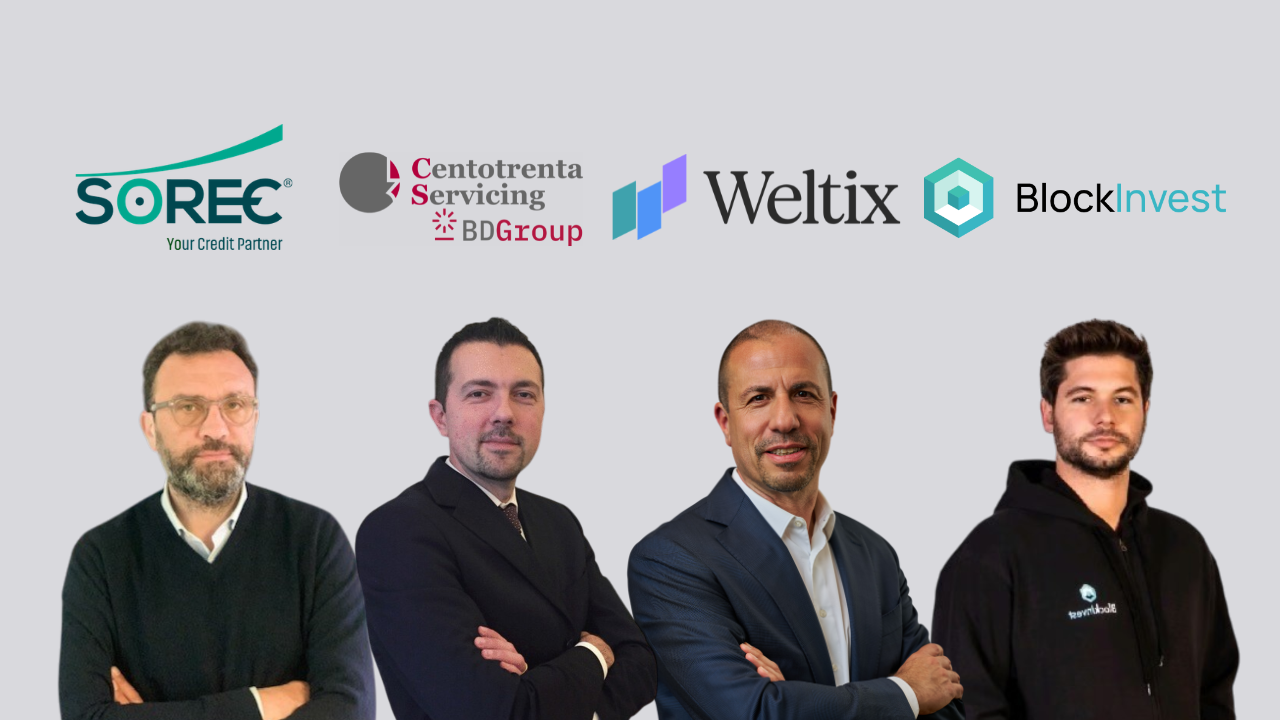
Alongside Weltix (the legal infrastructure backed by Consob authorization) and BlockInvest (the technology infrastructure), Seturion acts as the settlement infrastructure.
This three-legged partnership, combined with the operations already executed in Italy, aims to establish an industry standard in the country for all institutions looking to adopt financial instrument tokenization.