The €10 million transaction represents the first concrete application of the partnership announced in June and marks a significant step forward in the use of DLT technology in NPL securitizations.
Just over a month after the announcement of the strategic partnership between doValue and Weltix to apply Distributed Ledger Technology (DLT) to securitization operations, the project reaches a significant operational milestone today with the completion of the first tokenized issuance within an NPL securitization.
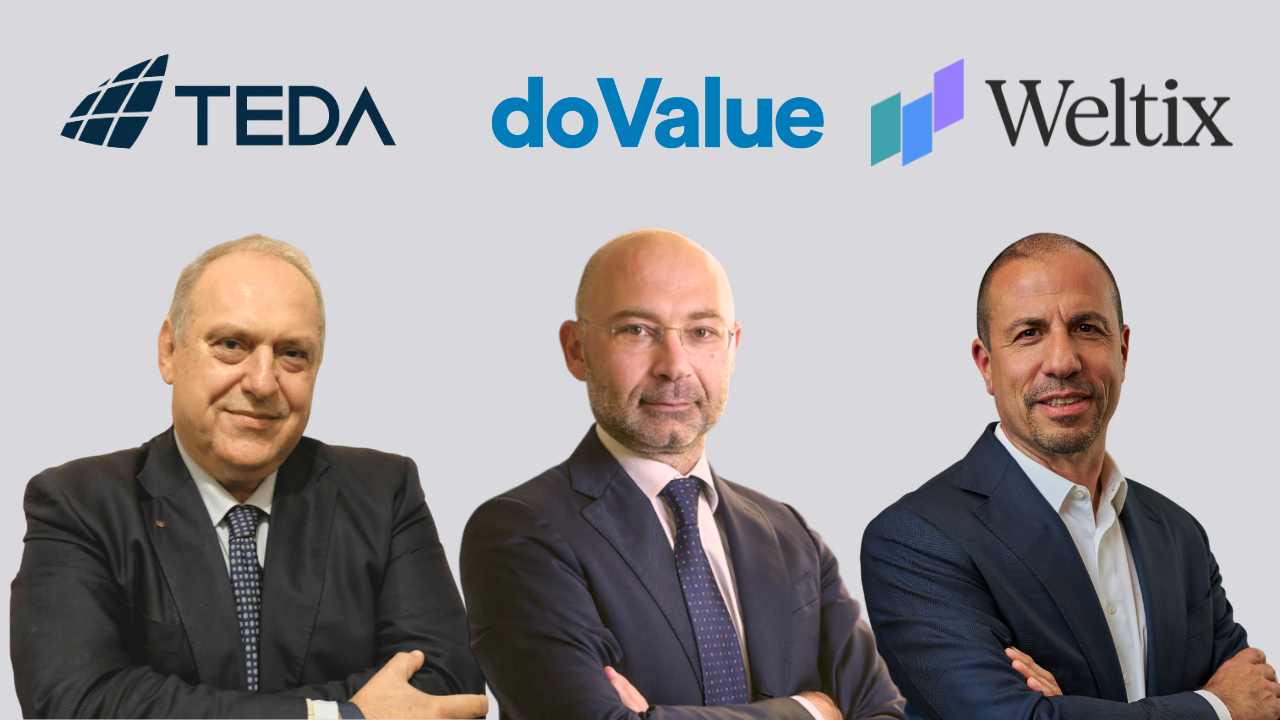
doValue S.p.A., a European strategic financial services provider, and Weltix S.p.A., an infrastructure provider authorized by CONSOB as a DLT Register Manager, have given concrete execution to the industrial vision presented by the two companies last June, demonstrating doValue’s ability to swiftly turn this vision into an operational, regulated solution applied to a real market transaction.
The doValue group, through its subsidiary doNext S.p.A., handled the establishment of the special purpose vehicle and serves as Master Servicer, Corporate Services Provider, Calculation Agent, Representative of the Noteholders, and Paying Agent, leveraging its expertise in structuring and managing securitization transactions. Teda Service S.r.l. acts as the Special Servicer for the transaction and coordinated the investor club deal. Weltix S.p.A. acted as Manager of the DLT Register, ensuring the digital issuance, management, and circulation of the financial instruments in compliance with the Italian regulations introduced by the FinTech Decree, with legal support from Simmons & Simmons and technological support from BlockInvest. Legal counsel for the transaction was provided by Intellexia Sta S.r.l., with a team led by managing partner Vanessa Solimeno.
The use of DLT technology allows securities to be natively digital, eliminating the need for subsequent dematerialization and streamlining issuance, management, and transfer processes. Furthermore, The infrastructure developed by BlockInvest, Weltix’s technological partner, enables greater transaction traceability, digital governance over the entire lifecycle of the financial instrument, and faster settlement times compared to traditional models.
The transaction confirms growing market interest in using DLT technology in structured finance and represents a further step toward the digitalization of securitizations.